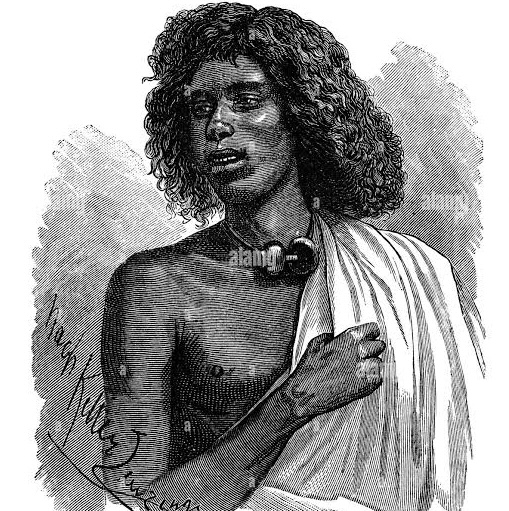
The culture of guest hosting, what we call Martisoor, is not something Somalis borrowed or learned from elsewhere. It is a long-standing tradition, born together with Somali culture itself, woven into who we are. If there is one thing a Somali person is known for across the world, it is welcoming guests, taking care of them and making them feel at home. Some things I carry from childhood and never forget, and for me the deepest of these are the wisdom and the stories told to me by my grandfather Omar Elmi (AUN)
He and his companions once made a long journey, in a time when life was harsh and unforgiving. There were lions and other dangerous animals along the way, and they carried arrows to protect themselves. For three days they travelled without seeing another human being, suffering from thirst and hunger, their bodies worn down by the road. Eventually they came upon a small household headed by a woman. She had nothing only her children and a very few goats and sheep. When she saw the exhausted guests approaching her house, she was struck by how little she had to offer them, and yet she never hesitated. She was committed to providing for them from the little available at home, and she slaughtered a sheep. In that moment she composed this poem:
Haddi maalku soo galo oo martidu soo maryo cadaato;
Manfacooda Eebbaa qabee lama madoobaado;
My grandfather told this story to describe how the culture truly was. Whether a host had something or almost nothing, guests were respected and cared for all the same. Hospitality was not a favour it was a responsibility that every single person was expected to carry, and carrying it well was a source of pride for every Somali. This is why, in those days, if someone wanted to travel, mostly on foot as it was, across long and dangerous distances, the only thing they packed was their clothes. Food was never a worry along the way, because every Somali they met felt bound to feed and shelter them.
There's an old Somali story about an Ogaden man who decided, late in life, to make the Hajj. When he packed, he took no food at all, just a small bag of clothes. People were baffled. "What will you eat on a road that long?" But he wasn't worried. To him it wasn't a foreign journey it was just a walk through his own people's land. "Why would I carry food?" he said. "I will find the camels of Reer Afgaab( subclan of Ogaden), and drink their milk. His answer shows how completely people relied on one another, and how deeply the bond of kinship and hospitality stretched across the whole journey.
There is one detail in all of this that matters most to me. In the culture I am describing, it was shameful to remind your guest that you had fed them, or to list what you had served. The giving was quiet; the honour was in the act itself, not in the announcement of it. And this is exactly where the shift has happened. Today, if you host someone at your home or buy them a meal at a hotel, it is announced. It is posted on social media with captions like "I provided food for so-and-so." Imagine if my grandfather were alive to see such a thing. It is a drastic change, from honouring the guest to marketing the gesture, from quiet generosity to broadcasting after a small meal. People now photograph the food, the place, and even the guest themselves, then caption it, "I honoured so-and-so as my guest and gave them food." The honour has been turned inside out; it now points back at the host, not toward the guest.
When I meet people of other nationalities, the one thing I take real cultural pride in is that Somalis are good at honouring guests. Yet now I watch social media take that very virtue and turn it from honouring into showing off. What I have come to realise is this: when a businessperson or a politician honours traditional leaders and chiefs, they photograph them while they eat and then announce, "I gave them food." Is this what we inherited from our great forefathers? Is this our culture? Is this something we can genuinely take pride in? It is not. It is a change of identity, a great departure from who we were.
The saddest part of all is a well-known sheikh who gave his own father a car and brought the most prominent news media in to broadcast the event. It was his own father, and it was simply a gift from a son to a parent. I had wanted to believe that religious leaders, of all people, would preserve the good culture we once had, that they would be the last to trade dignity for attention. Instead, they are among those who carry even a private act to the cameras. It is not disgusting so much as it is deeply sad. Social media has shifted everything, and in the process, so much of what was good in us, morally and culturally, has quietly changed who we are and how we are.